Grief and its aftermath: The impact on mind, body and spirit
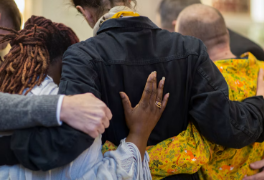 The loss of a loved one – a parent, spouse, child, relative or friend – can be soul-crushing, and for some, grief does not fade easily. Grief, a natural response to losing someone close, is often described as coming in waves: one moment, a person may feel fine, only to find themselves feeling low and crying the next.
Long-lasting grief, particularly Prolonged Grief Disorder (PGD), can affect health in ways that are difficult to quantify.
According to Psychiatry.org, An individual with prolonged grief disorder (PGD) may experience intense longing for the person who has died and/or feelings of being preoccupied by thoughts of the death of that person. In children and adolescents, the preoccupation may focus on the circumstances of the death. Additionally, the surviving individual may experience feelings of being in shock or disbelief about the death, of insecurity and uncertainty about where they fit into a world without the deceased person, which often undermines their sense of belonging, meaning, purpose, and self in the survivorship experience.
PGD is associated with poorer mental health, sleep problems, physical symptoms, chronic disease, higher healthcare use, and increased mortality risk.
Grieving in different degrees
We all mourn and grieve differently, and Prolonged Grief Disorder (PGD) has no single cause. It can develop through a combination of factors, including the relationship with the deceased, the circumstances of the death, pre-existing vulnerabilities, social support and psychological processes that sustain intense grief over time.
Main risk factors for PGD can include:
Very close relationships – Losing a child or partner is often associated with more severe grief, as these relationships are closely tied to attachment, security and caregiving.
Sudden, unexpected, violent, or unnatural death – These losses can undermine a person’s sense of safety, control and trust.
Limited social support and ongoing stress – Lower satisfaction with social support is associated with both acute and prolonged grief, while ongoing financial, safety, family or community stress can hinder recovery.
Previous mental or physical health problems – Pre-existing health difficulties can complicate the grieving process and are associated with greater emotional distress following a loss.
Socioeconomic disadvantage – Lower income and educational attainment are associated with slightly higher levels of prolonged grief symptoms, although these associations are small.
Strong emotional closeness and caregiving strain – Studies of family caregivers found that emotional closeness to the deceased and psychological distress before the loss were associated with persistent grief symptoms, while caregiver burden alone was not a consistent predictor.
Toll on mental health
Citing a 2021 study, PGD commonly overlaps with depression, anxiety, and post-traumatic stress symptoms. A meta-analysis found that among adults with prolonged grief symptoms, 63% also had depression symptoms, 54% had anxiety symptoms, and 49% had post-traumatic stress symptoms, although the estimates varied considerably across studies.
Persistent grief can also be linked with loneliness and lower perceived physical health. A 2026 cross-sectional study of 332 bereaved adults found that higher prolonged-grief symptoms were associated with more depression, greater loneliness, and poorer perceived physical health, with reduced meaning in life statistically explaining these associations.
Grief impacts physical health
A 2025 systematic review of 18 studies found significant associations between PGD and physical health problems, somatic symptom distress, insomnia, blood pressure, bodily distress syndrome, and chronic physical diseases. Thirteen of the 18 studies, or 72%, reported a moderate or strong association between PGD and physical or somatic illness.
Sleep appears to be an important part of this relationship. A 2026 study of bereaved parents also reported that prolonged grief and insomnia commonly occurred together, although it did not establish that one caused the other.
The newest physical-health study in the supplied search results, published in August 2026, reported an association between prolonged-grief measures and chronic disease in a matched case-control sample of 400 adults. However, the study found that the International Prolonged Grief Disorder Scale subscales did not retain independent significance after multivariable adjustment, so its results do not establish that PGD independently causes chronic disease.
Meanwhile, A 2025 review of 12 biomarker studies reported altered cortisol rhythms, increased pro-inflammatory cytokines, and immune-system dysregulation in pathological grief, but emphasized small samples, inconsistent diagnostic criteria, and limited control for psychiatric comorbidities, suggesting that long-term grief may affect biological systems involved in stress, inflammation, and immune regulation.
Further research will continue to shed light on grief’s far-reaching effects beyond emotional, physical and mental well-being. Persistent grief is associated with depression, anxiety, loneliness, insomnia and poorer perceived health, as well as somatic distress, chronic disease, blood-pressure changes and sleep disruption. Preliminary biological studies also suggest changes in stress hormones, inflammation and immune regulation, although findings remain varied.
Coping with grief
 There are various ways, from therapy to free communication and practical activities to help one cope from grief and navigate thru a difficult time of loss. The UNICEF offers a few strategies, including:
Understand that not everyone will know how to help you – This means that there are people who may not know how to support someone who is grieving due to misconceptions about loss or discomfort discussing death and emotions. Seek support, but try not to feel hurt or disappointed if others struggle to understand your grief or respond in ways that do not meet your needs.
Take responsibility for your recovery – We often blame others or external events for our emotions, including grief, which can leave us feeling powerless to recover. Taking responsibility for our feelings allows us to actively work through the pain of loss and make meaningful progress towards healing.
Accept that your life will likely change – The death of someone close can permanently change our lives and sense of identity, but grief can also foster psychological and spiritual growth. Although the intense pain may fade, the loss remains part of us as we develop a new connection with our loved one through their memory and spirit.
Talk about how you feel – Sharing your feelings honestly with someone you trust is an important part of grieving, as keeping emotions bottled up can hinder healing. Talk openly about your loved one, what you miss, the dreams you shared and the loneliness, anger or sadness you feel.
Write your loved one a letter – Writing an honest letter to a deceased loved one can help address unresolved feelings, regrets, forgiveness and unspoken words, bringing a sense of emotional closure. Writing as though they were still alive and available to talk allows you to explore the relationship deeply and express what remains unsaid.
Focus your energy on self-care activities – Basic self-care is essential when coping with grief, including adequate sleep, a balanced diet, regular exercise and enjoyable activities. Although grief can make self-care difficult, neglecting physical well-being can worsen emotional distress.
Hold off on making major life decisions or changes – Although it may be tempting to make major changes to ease your grief, grief can affect your judgement. Where possible, postpone significant life decisions until your emotions have settled to reduce the risk of making choices you may later regret.
Lastly, be gentle with yourself. Do not rush yourself to “forget and move on”, even if that is the advice you will likely receive. Any significant, albeit painful, event needs to be experienced in its own time, allowing you to gradually heal from the pain of loss. Time, after all, heals all wounds. Most importantly, when you remember a departed loved one, shift your focus to celebrating their life and the good times you shared with them. This may be a meaningful way of honoring their memory, rather than associating it solely with grief.
Category: Top Story